

The Focus Effect
Listen. Reclaim your attention.

The Focus Effect
Go deeper
Read it without opening six other tabs.

The Most Valuable Thing You Keep Giving Away
Let’s begin with a small experiment.
Try to remember the last thing you were doing before you opened this talk.
Were you checking email? Reading the news? Looking for something online? Did you pick up your phone to do one specific thing, only to emerge seventeen minutes later knowing what an actor from a television show you never watched eats for breakfast?

It happens.
You walk into a room and forget why you’re there.
You open your phone to check the weather and somehow end up watching a man in Ohio restore a toaster manufactured during the Eisenhower administration.
Meanwhile, the weather remains a mystery.
This is not because you’re lazy, unintelligent, or hopelessly undisciplined.
It’s because nearly everything around you is competing for the same limited resource:
Your attention.
Your phone wants it. Advertisers want it. News outlets want it. Streaming services want it. Social media platforms have spent billions of dollars learning how to capture it, hold it, and sell it to somebody else.
And they are very good at their jobs.
The result is that many of us move through the day in a state of constant partial attention. We’re answering one message while thinking about another problem, half-listening to someone we love while wondering why the phone just buzzed, and carrying twelve unfinished conversations around in our heads.
We’re busy all day.
We’re tired at night.
And sometimes, if we’re honest, we’re not entirely sure what we accomplished.
That matters because your attention is not merely a productivity tool.
It is one of the primary forces shaping your life.
What you repeatedly focus on influences what you think about. What you think about shapes what you desire. What you desire affects the choices you make. And those choices, practiced over time, determine the person you become.
Your attention is helping form you—even when you aren’t paying attention to where it’s going.
Every one of us has something worthwhile to build with the life we’ve been given. A family. A marriage. A vocation. A business. A friendship. A life of prayer. A body of meaningful work. A community that is stronger because we were part of it.
But good intentions do not automatically become meaningful action.
You can care deeply, believe sincerely, own three excellent planners, and still spend your days reacting to whatever is loudest, newest, or flashing red.
The things that matter most rarely shout for our attention.
They wait.
Your child waits for you to put down the phone.
Your spouse waits for you to finish the email.
The work you know you should begin waits for the urgent little tasks to stop multiplying.
God waits for the noise to settle.
And because the noise never settles on its own, the important things can remain waiting for a very long time.
But here’s the good news:
Focus is not a personality trait handed out at birth to monks, fighter pilots, and the one person you know who keeps an empty email inbox.
It is a skill.
It can be strengthened. It can be protected. It can be directed.
The difference between constant activity and meaningful accomplishment is not always talent, intelligence, or opportunity.
Often, it is focus.
Deliberate, sustained attention to what matters most.
And every single one of us—regardless of how distracted we may feel today—can get better at it.
So that is where this journey begins:
Learning to reclaim your attention, point it toward something worthy, and use it to become more fully the person God is calling you to be.

Focus
Focus determines direction.
Let me repeat that: Focus determines direction.
And direction either aligns you with God’s will or pulls you away from it.
Think about that for a moment. Your focus isn’t some passive thing that happens to you. It’s the steering wheel of your life. Every single day, you’re pointing that wheel somewhere. And wherever you point it, that’s where you’re going.
The Parent at the Crossroads
Imagine you’re watching your daughter navigate her first real crisis. A failed exam. A friendship that fell apart. A dream that didn’t materialize.
She comes to you broken. Defeated. Spiraling into self-doubt.
You can sit with her in that spiral. You can validate every negative thought, every catastrophic prediction. You can focus—right along with her—on everything that’s broken and wrong and unfair.
And if you do? She’ll feel more broken. More defeated. More lost.
Or—you can do something different. You can lock in on what matters. You can say: “This one setback doesn’t define you. Let’s focus on what you learned. Let’s focus on what’s next. Let’s focus on who you’re becoming through this.”
Same crisis. Same pain. Same circumstances.
But one response drowns her in despair. The other lifts her toward hope.
Here’s what’s powerful: Your focus becomes her focus. Your direction becomes her direction.
Your grandmother likely understood this. When you were young and afraid, she didn’t focus on your fear. She focused on your strength. She didn’t dwell on what could go wrong. She focused on what you were capable of. And somehow, her focus became your compass. Her belief in you became the thing that saved you.
That’s the inheritance of focus. That’s the power you carry.
When your children—or grandchildren—are drowning, they’re not looking for someone to drown with them. They’re looking for someone who can see the shore.
The News Trap
Imagine you’re scrolling through your phone. A headline catches your eye. Something troubling. Something that stirs concern about the state of the world.
You click. You read. Your mind races with worry.
Then you see the comments. People expressing similar fears. Analysis that deepens the concern. You find yourself scrolling deeper, reading more, commenting, debating, sharing your worries with others who are equally concerned.
Two hours disappear. Your peace has shifted. Your family is still waiting for dinner. Your own work—the real work in front of you—sits untouched. But you feel like you’re staying informed. You feel engaged.
Except here’s what’s happening: The news will always be there. There will always be another concern, another crisis. The machine is designed to keep you scrolling, keep you emotionally invested in things you cannot control.
And while you’re locked in that focus—on situations beyond your influence, on arguments that will never be resolved in a comment section—you’re not focused on what you actually can do.
You’re not focused on your family. On your neighbor. On the work God has placed directly in front of you. On building community. On serving those around you. On the responsibility or opportunity that requires your actual presence and effort.
Martha learned this lesson when Jesus visited her home. She was so focused on preparing everything perfectly that she missed what was right in front of her. Jesus gently reminded her: “Mary has chosen what is better.” (Luke 10:42)
The world’s problems don’t disappear when you step back from the news cycle. But something remarkable happens when you redirect your focus: You discover that you actually have power over your own life. You can build something real. You can serve someone nearby. You can make a tangible difference.
That’s not naivety. That’s wisdom. That’s focus.
The Great Work
Most distractions don’t introduce themselves as distractions.
They arrive looking important.
An email that seems to require an immediate response. A notification that might contain something useful. A minor problem that suddenly feels urgent. One quick search that becomes six open tabs, three unrelated videos, and forty-five minutes you will never get back.

None of these things is necessarily bad.
That’s what makes them dangerous.
The greatest threat to what matters most is not always something destructive. Often, it is something mildly useful that pulls you away from something deeply important.
You sit down to finish something that matters.
Then you remember you should check the weather.
While checking the weather, you notice a headline.
The headline leads to an article.
The article reminds you of something you should order.
And suddenly you’re comparing reviews of cordless leaf blowers when you don’t have any leaves.
This is how focus dies.
Not dramatically. Not with trumpets or explosions.
It wanders off wearing comfortable shoes.
Nehemiah understood this.
He had returned to Jerusalem to rebuild the city’s broken walls. It was difficult, necessary work. It required leadership, courage, organization, prayer, and sustained attention.
His enemies couldn’t stop the work directly, so they tried something subtler.
They invited him to a meeting.
Of course they did.
Apparently, pointless meetings have been interfering with important work since at least the fifth century B.C.
The invitation probably sounded reasonable. Maybe even collaborative. But Nehemiah recognized it for what it was: an attempt to pull him away from the work God had placed before him.
So he answered:
“I am carrying on a great project and cannot go down. Why should the work stop while I leave it and go down to you?” (Nehemiah 6:3)
They sent the invitation four times.
Four times, Nehemiah gave them the same answer.
No new explanation. No twelve-paragraph email. No scheduling poll.
I am doing important work.
I will not come down.
That is focus.
Focus is not merely concentrating harder. It is recognizing that every yes contains a no. When you give your attention to one thing, you are taking it away from something else.
The difficult question is not, “Is this worth doing?”
Plenty of things are worth doing.
Your inbox is filled with things worth doing. So is your house, your phone, your calendar, and the mysterious drawer where batteries, instruction manuals, and unidentified charging cables go to die.
The better question is:
Is this what I am supposed to be doing right now?
Your great work may be raising a child, repairing a marriage, caring for someone you love, building a business, learning a skill, finishing a project, strengthening your faith, or becoming the person God is calling you to be.
Whatever it is, something will always invite you to come down.
Another notification. Another argument. Another minor emergency. Another person’s priority. Another hour spent appearing productive instead of accomplishing what matters.
You do not have to treat every invitation as an obligation.
Sometimes the most faithful answer you can give is:
I am doing important work.
I cannot come down.
The Setback
Now imagine a different kind of storm. A job loss. A relationship ending. A serious health crisis. A season where everything feels like it’s falling apart.
You can sit there consumed by what you’ve lost. Replaying how it could have been different. Spiraling in resentment. Comparing your wreckage to everyone else’s highlight reel.
Or—you can shift your focus. What are you learning? How are you growing? What doors might be opening instead of the ones that just slammed shut?
Here’s the thing: Your circumstances don’t change.
But everything changes.
The Apostle Paul wrote this from a prison cell—literally locked behind bars, awaiting execution:
“Finally, brothers and sisters, whatever is true, whatever is noble, whatever is right, whatever is pure, whatever is lovely, whatever is admirable—if anything is excellent or praiseworthy—think about such things.” (Philippians 4:8)
He wasn’t in that cell by choice. But he chose what he focused on.
And that choice changed everything.
Abraham Lincoln understood this. During the Civil War—the darkest chapter in American history—he said:
“The best way to predict your future is to create it.”
Lincoln could have focused on the impossible odds, the bloodshed, the division. Instead, he focused on the vision of a united nation. That focus didn’t make the war disappear. But it gave him direction when everything else was chaos.
The Fork in the Road
When adversity hits—and it will—you stand at a crossroads.
Two paths. Same situation. Completely different destinations.
Path One: The Path of Spiritual Weakness
You can focus on all the unproductive things that will drain your peace, crush your faith, and steal your hope:
Self-pity. Resentment about your circumstances. Comparing your life to everyone else’s. Dwelling on past mistakes you can’t change. Obsessing over a future you can’t control. Letting fear and worry
consume your thoughts. Staring at how impossible the mountain in front of you looks.
This path feels natural. Your brain gravitates here. It’s the path of least resistance.
But it leads nowhere good.
Path Two: The Path of Spiritual Strength
Or, you can focus on productive things that actually transform you:
God’s promises. The next right step. Serving and encouraging those around you. Gratitude for what you do have. Focusing on what’s in your hands right now. Trusting in a larger purpose. Remembering past victories and how you’ve overcome before. Performing your duties with excellence. Keeping your eyes fixed on what matters most.
This path requires intention. It requires choice. It requires you to deliberately point your focus somewhere better.
But it leads everywhere good.
Jesus said it this way:
“Therefore do not worry about tomorrow, for tomorrow will worry about itself. Each day has enough trouble of its own.” (Matthew 6:34)
He wasn’t saying your problems don’t exist. He was saying something far more radical:
Focus where you’re at. Right now. Just now. That’s where I am, and I am your strength.
Winston Churchill lived this principle. During World War II, when Britain stood alone against Nazi Germany, he could have focused on the enemy’s superior numbers, their advanced weapons, their seemingly inevitable victory. Instead, he said:
“Success is not final, failure is not fatal: it is the courage to continue that counts.”
Churchill’s focus wasn’t on the odds. It taking that next useful step. On perseverance. On the vision of freedom. And that focus—that deliberate pointing of his attention—rallied a nation and changed the course of history.
The Drowning Man
Peter was in a boat during a storm. Waves crashing. Wind howling. Absolute chaos.
Then he saw Jesus walking toward him. On the water.
At first, Peter was locked in with steely-eyed focus. Eyes on Jesus. And he did something impossible—he walked on water too.
But then something shifted. Peter looked away. His focus drifted to the waves. To the wind. To how impossible the situation actually was.
And he sank.
Jesus asked him: “
“Why did you doubt? Why did you look away?” (Matthew 14:31, paraphrased)
Notice what Jesus didn’t ask: “Why didn’t the storm disappear?” “Why didn’t the waves get smaller?” “Why didn’t your circumstances change?”
Because they didn’t. The storm raged on. The waves crashed the same. The circumstances were identical.
But Peter’s focus changed.
And so did his ability to walk through it.
This is what Viktor Frankl discovered in the concentration camps of Nazi Germany. In his book Man’s Search for Meaning, Frankl observed that prisoners who survived weren’t necessarily the strongest or the healthiest. They were the ones who maintained focus on something larger than their suffering. A purpose. A reason. A future worth living for.
Frankl wrote:
“Everything can be taken from a man but one thing: the last of the human freedoms—to choose one’s attitude in any given set of circumstances.”
Even in a living hell, focus determines direction.
Here’s the Neuroscience
Your mind is powerful. Incredibly powerful. Billions of neurons firing. Millions of thoughts every single day.
But here’s the hard truth: You can only consciously focus on one thing at a time.
You cannot genuinely worry about your future while also being grateful for your present. Your brain won’t permit it.
You cannot hold onto bitterness while also holding onto hope. One has to give.
You cannot focus on your fear and your faith simultaneously. Pick one.
So here’s where it gets powerful.
If you want to stop focusing on something unproductive––or even destructive—don’t try to suppress it. Don’t white-knuckle it away. That usually just makes it stronger. The harder you try not to think about something, the more it consumes you.
Instead? Redirect your focus.
Let me share with you how.
Right now, I want you to try really hard to not think about your biggest fear or worry.
Don’t think about it. Stop thinking about it. Really focus on not thinking about it.
What’s happening? It’s right there, isn’t it? Front and center. Impossible to ignore.
Now—think about someone you love. Really picture their face. Remember a moment when they made you laugh. Hold onto that memory.
There you go. The fear didn’t disappear because you fought it. It disappeared because your mind found something more powerful to focus on.
That’s the simple principle.
Your brain can’t focus on two things at once. So when you give it something better, something true, something worth your attention—the destructive thought loses its power.
C.S. Lewis, the Christian apologist and writer, understood this deeply. He said:
“Aim at Heaven and you will get Earth thrown in. Aim at Earth and you will get neither.”
Your focus determines your trajectory. If you focus on the temporary, the material, the immediate—you miss the eternal. But if you fix your eyes on what’s true and eternal, everything else falls into proper perspective.
Practice
When anxiety creeps in. When doubt hits. When you feel overwhelmed or discouraged or lost:
Pause.
Just stop. For one second.
Check what you’re focusing on.
What are you actually paying attention to? Is it productive or destructive? Is it true, or is it fear masquerading as truth?
If it’s destructive—or even merely unproductive––redirect.
Don’t fight it. Don’t try to make it disappear through sheer willpower. Just point your mind toward something better. Something true. Something noble. Something that reminds you of who you are and what you’re capable of.
Then notice the difference.
Feel how your peace returns. How your strength increases. How your hope is restored.

Final Takeaways
Treat your focus like a compass.
Be very deliberate where you point it.
Because your focus determines your direction.
And your direction determines your destination.
The Psalmist wrote:
“I keep my eyes always on the Lord. With him at my right hand, I will not be shaken.” (Psalm 16:8)
Not because life gets easier. Not because the storms disappear or the problems vanish.
But because focus changes everything.
James Allen, the author and philosopher, said it perfectly:
“As a man thinketh in his heart, so is he.”
Your thoughts create your reality.
Your focus shapes your thoughts. So your focus, ultimately, shapes who you become.
You are not your circumstances. You are not your past. You are not even your present.
You are where your focus is pointed.
Now, move forward, trusting in God. And focus like your life depends on it.
Because it really does.
Put your focus to work
Five doable actions you can take today.

1. Find Out Where Your Attention Is Actually Going.
Set aside 15 minutes and look honestly at the past few days. What received most of your mental energy—meaningful work, people you love and responsibilities you can influence, or news, worry, comparison and the mysterious gravitational pull of your phone? Write down one thing receiving too much attention and one thing that deserves more.
“Never mistake activity for achievement.” (John Wooden)
2. Name Your Great Work
Complete this sentence: “The important work God has placed before me right now is…” It might involve your family, faith, health, vocation, a relationship or a project you have delayed. Write it somewhere visible. When a lesser demand tries to pull you away, borrow Nehemiah’s answer:
“I am doing important work. I cannot come down.”
3. Practice the Pause-and-Redirect
When you notice yourself spiraling into fear, resentment or worry, stop and name what has captured your mind. Then deliberately redirect it toward something true and useful: a promise from Scripture, one reason for gratitude, someone you can help or the next action within your control. Don’t wrestle the unproductive thought for twenty minutes. Give your mind something better to do.
4. Help Someone See the Shore
Think of one person who is discouraged, overwhelmed or stuck. Have a conversation that acknowledges the difficulty without feeding the despair. Remind that person of a strength, a past victory or one manageable next step. Be the steady presence who can see beyond the waves.
5. Protect One Daily Block of Undivided Attention
Choose one important activity and give it 30 uninterrupted minutes each day for the next week. Silence notifications, close unnecessary tabs and put the phone somewhere that requires actual physical effort to retrieve. At the end of the week, notice what changed when something important finally received your full attention.
Waypoints
Step back, see differently, and keep going.

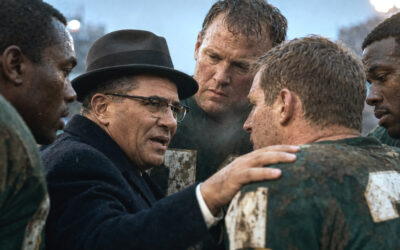
What Lombardi Was Really Trying to Win
The Catholic faith behind Lombardi’s pursuit of excellence…

Thank God for Gary. Probably.
The patience you thought you had…

You Might Be Wrong
The uncomfortable possibility hiding between certainty and truth…
The Mindset Assessment
Ready to stop guessing and start growing?
Our 21-question mindset assessment is like a personal GPS for your brain, revealing exactly where you’re crushing it (go you!) and where you might need a little TLC. Whatever your strengths and weaknesses, this isn’t about judgment—it’s about clarity. Because once you know what you’re working with, you can actually do something about it. Give it just 10 minutes and find out what your mindset is really made of.